
Control Resonant, Remedy Entertainment’s paranatural horror sequel, launches September 24 on PC (Steam and Epic), PS5 and Xbox Series X|S — and with the review embargo now lifted, critics have weighed in on one of the fall’s strangest big-budget games. The verdict so far: bigger, weirder and more ambitious than the original Control, with a few reservations.
Dylan Faden’s Turn in a Broken Manhattan
Control Resonant hands the spotlight to Dylan Faden, the younger brother of the first game’s protagonist Jesse. Dylan became an indentured lab rat at age ten, spent years in a coma, and was possessed by the malevolent entity known as the Hiss. After Jesse — now Director of the Federal Bureau of Control — oversaw a seven-year lockdown to contain the Hiss inside the Oldest House, the threat has escaped into Manhattan, and the city is cut off from the outside world. Dylan must help the Bureau deal with a new threat while searching for his sister, who may not even be on the same dimensional plane.
It’s a story about people who fall through society’s cracks, reflected through Dylan’s relationships with his AWOL sister and his handler, FBC agent Zoe de Vera. Unlike the confident, determined Jesse, Dylan is shy and hesitant — but his powers give him far more mobility than his older sister, from air dashes and afterimage-speed sprints to a grappling hook unlocked via Jesse Quests.
Bigger, Weirder, More Action-RPG
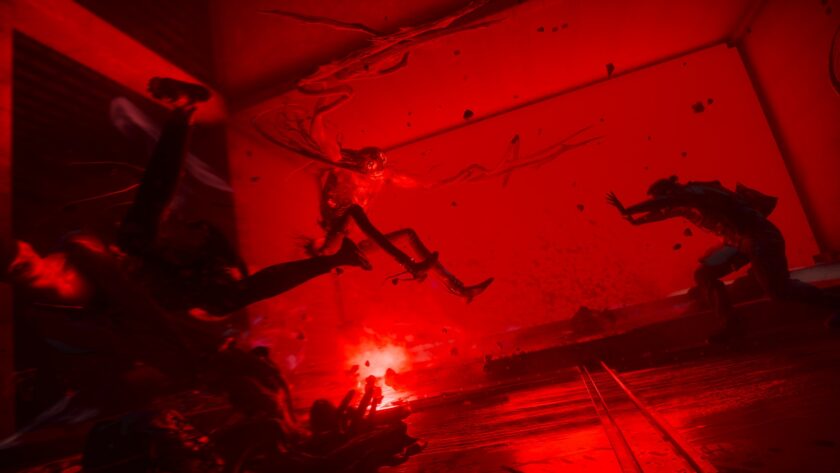
Where Control was confined to the shifting Brutalist corridors of the Oldest House, Resonant moves out into warped cityscapes — gravity-distorted, Inception-like areas where Manhattan has folded in and on top of itself. Remedy is keen to stress it’s “technically not an open world,” offering digestible, focused sandboxes packed with missions, side stories and even arcade cabinets with timed challenges in every zone.
Combat is far more melee-slanted than Jesse’s gunplay. Dylan wields the Aberrant, a shapeshifting paranatural weapon with six first and secondary forms, status effects like burn and infect, and multiple skill trees to spec into high-crit or crowd-control builds. New combat abilities are learned by defeating bosses called Resonants — colossal encounters that include a giant porcelain doll’s face that bludgeons Dylan with taxis and girders. A limbo-like hub called The Gap lets you swap and test loadouts, and traversal learned in interdimensional Faults includes wall-walking gravity mechanics.
Expect a serious time commitment: Remedy says the story runs around 30 hours, with completionists looking at 50-hour runs. Familiar faces return too — including Matthew Porretta’s Casper Darling — and the game ships with a modular Assist Mode for accessibility.
What the Reviews Say
Eurogamer’s review calls Control Resonant “more scale, but less narrative bite than its sibling” — praising its spectacle and striking design while arguing that MMO-style world events and a sprawl of side activities dilute the uncanny focus that made the original special, and noting the combat still isn’t Remedy’s strongest suit.
Elsewhere the reception runs warmer. PlayStation Blog’s hands-on calls it “one of the most surreal adventures of 2026,” highlighting its disturbing Resonant bosses, reality-warping taxis and DualSense integration — with Zoe’s radio chatter playing through the controller speaker. On the technical side, PC Gamer reports Control Resonant is “one of the best-looking games at low graphics settings” the outlet has ever seen — you won’t need a monster GPU to run Manhattan’s folded skyline.