Valve has finally spoken up about the flood of AI-generated slop and cloned games pouring onto Steam — and its core message to the developers being ripped off is, essentially: keep working on your game so the copies can’t keep up. At the Steam Indie Connect developer conference in Korea on October 27, Valve business team members Tom Giardino and Marc Wilkinson addressed the current state of the platform in a talk reported by Inven Global, and their comments made clear that Valve sees the solution to AI cloning lying largely with developers themselves.
What Valve Said
The pressure on Valve has been building for weeks. Indie developers have reported receiving threatening messages demanding money to prevent AI clones of their games from being released alongside the originals — an extortion scheme that turns genAI cloning into a ransom business. Giardino said this was the first he’d heard of the ransoming examples, called it “probably an issue for law enforcement,” and said Valve would “help in whatever way we can” — but he also underlined the company’s hands-off stance on the technology itself: “We don’t want to be gatekeepers telling developers which tools they should or shouldn’t use.”
Make Your Games “Less Copyable”
Giardino’s practical advice: “Launch feels like the finish line, but it’s actually the starting line.” Developers can guard against copycats, he said, by building active communities, establishing trust with players, and making the legitimate version of a game the best version available. And then there’s the design advice: “Rather than relying on a single mechanic that someone can easily copy, you need to keep growing your game by adding features, personality and creativity that stem from your own perspective.”
Both are valuable techniques — and both presume developers have the resources to keep updating a game indefinitely while their launch sales are being eaten by clones shipping before the original is even out. As Eurogamer notes, the comments also came second-hand, via machine translation that Inven Global separately verified with a native Korean speaker.
Next Fest Doubled Its Demos
The talk came after a Steam Next Fest that had twice the number of demos as the previous event — many of them, by press accounts, low-quality AI-generated games. Wilkinson explained that Next Fest deliberately surfaces demos at random for the first couple of days before curating from day three, and argued that “many articles complaining about a flood of low-quality games were written based solely on those first two days.” But he also confirmed the problem is real and being worked on: “We are fully aware of the situation, and a significant number of people are thinking about how to solve this problem.”
The Game That Became the Poster Child
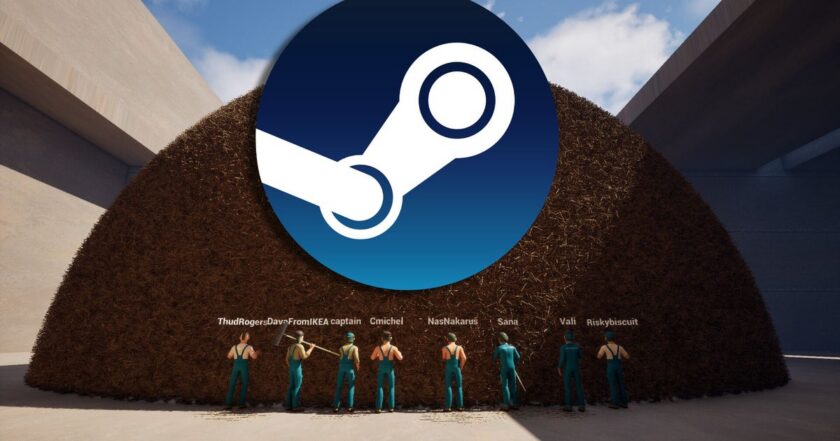
The case that put AI cloning in the headlines is Needle in a Haystack Simulator — a simple indie game that isn’t even out yet, but has been copied so many times it’s hard to know which game is the original. The developer has resorted to joking about a new game mode where you have to find the original game amidst a pile of copycats. It’s a striking illustration of why “just keep developing” rings hollow: without Valve stepping in, an unknown developer may never find the audience needed to build that community and trust in the first place. Valve, for its part, has been here before — in 2018 it declared that the right approach is to “allow everything onto the Steam Store,” “except for things that we decide are illegal, or straight up trolling.”